Holly Grove Farm

Good Food --- Good Life


Page 1 Name

Pasture Fed Beef and Pasture Fed Dairy Cow Shares Available.
You can own shares of a milk cow and board it on our farm.

For a reasonable fee we will take care of your cow and

you get really good milk from your cow. 

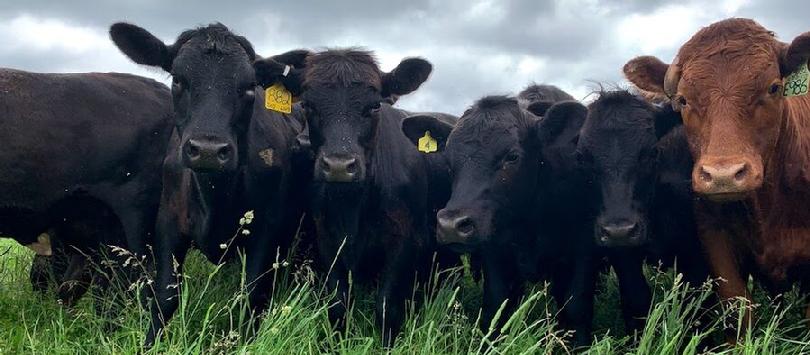
Holly Grove Farm is a small family farm offering Grass Fed Beef and Dairy Cow Shares-- allowing anyone living near the southeast corner of Virginia to own shares in dairy cows. You pay us to board your animal and you receive the milk from your cow. The beef and milk from animals raised on our farm is pasture fed, antibiotic and hormone free. 
Sincerly, David and Pamela Crane 

Holly Grove Farm, 13081 Corinth Road, Ivor, VA 23866   hollygrovefarm@gmail.com  757-373-2643


WE DELIVER!

If being part of a Cow Share group that shares pick up from the farm has hindered you from getting our amazing all natural milk, then that obstacle has been removed.
 
If you are in a group and pick up is becoming an insurmountable chore, or if you have never signed up due to the pick up element, then worry no more. For a $10/mo delivery fee--you can have your milked delivered to one of these distribution points.
  
Locations--

Chesapeake: Intersection of Greenbier and Kempsville Road

Norfolk: 300 Gunn Court 23505

Virginia Beach: 1218 Meadow Lake Road 23454

Hampton: 13 Brookfield Drive 23666
 

My family has enjoyed raw milk from our own cow for the last eight years. Some friends have shown interest in obtaining raw milk for their family. Raw milk is milk that has not been pasteurized. Some believe raw milk to be very good for you while others believe that raw milk consumption is not healthy. My family has had only good results. Please educate yourself on raw milk to be responsible and make your best decision. A search on the Internet should give you much information. Virginia Law only allows human consumption of raw milk from your own cow. We are now making available to you ownership in a cow so you can enjoy raw milk from your own cow. You buy the number of shares you want, based on how much milk you want, and we charge you a boarding fee.

We require a Cow Boarding Contract for those who wish to own shares in a dairy cow and board the cow at the above address. This contract is a legal and binding agreement. The contract is necessary to allow families who don't live on a farm to own a cow and get raw milk from it, and to protect our farm from unnecessary liability. Please email me (hollygrovefarm@gmail.com) with any questions you may have.


1 share in a cow will yield approximately 1 gallon of milk per week.


Purchasing 1 share will cost a onetime fee of $100 representing one 20th of a cow which cost about $2,000.00 and is good for about 3 years.


The monthly boarding fee for 1 share is $35.


The raw milk you pick up from Holly Grove Farm will not be pasteurized or homogenized and the cow will be fed no hormones or antibiotics. One gallon of milk will have about one quart of pure cream at the top which can either be skimmed off or stirred in.

The cream is excellent for making butter, ice cream or coffee creamer. Some with lactose intolerance to pasteurized store bought milk have found this raw milk to have no negative affects probably due to the live enzymes in raw milk. If share are not available you may prepurchase shares.  When enough shares are prepurchased to afford purchase of an additional cow, I will help the share owners find a cow and bring it to our farm.


If shares are available and you would like to purchase shares and enter into a boarding agreement, then please request a contract, fill out and enclose a check for the shares you wish to purchase and your first month boarding fee. I will send you a bill of sale and call you to arrange pickup of your milk.


Suggestion for milk pickup: If five or ten individuals from the Peninsula or Va. Beach bought shares in this plan, they could take turns picking up the milk each week and each person would only need to make the trip once every 5 or 10 weeks.

The farm is located about 50 minutes from Norfolk's Downtown Tunnel and the same distance from the James River Bridge. We are 20 minutes from Franklin. We are 30 minutes from Suffolk. We are 10 minutes from Zuni.


A Cow Boarding Agreement (Contract) can be requested, filled out and mailed with a check to purchase and board your share of a dairy cow. Pick up of your milk is your responsibilty. A bill of sale will be provided by return mail.


Grass Fed Beef Program

BENEFITS OF GRASS FED BEEF--see article at bottom of page

One quarter = approximately 60 lbs. (1/4th of one packaged beef steer.) You receive one fourth of all cuts of one steer--ground beef, ribs, roasts, and steaks. $7.95/lb + tax.

Ground beef is available for $6.95/lb + tax in one lb tubes. 

Individual cuts when available are priced individually.

About 40-50 lbs. of packaged beef will fit into a 10"x20"x24" space, a standard upright freezer shelf, or a standard freezer on a top refrigerator freezer.
Pay 1/2 at time of order and 1/2 at pick up.

One side (1/2) of steer is approximately 140 lbs.
Place order through hollygrovefarm@gmail.com


Directions To Farm: 
1:Take I-264 E or  I-64 E/HAMPTON ROADS BELT toward SUFFOLK.  
3:Merge onto US-460 W/US-58 W/US-13 S via EXIT 13A toward  SUFFOLK. 11.2 miles 
4:Merge onto US-460 W toward PETERSBURG.  8.5 miles  
5:Continue through the town of Windsor 
6:Pass Dairy Queen on left leaving Windsor 
7:Continue straight on US-460 W to Zuni 5 Miles 
8:Turn Left onto Route 644. 0.25 Miles 
9:Go under Rail Road Tracks on your left. 
10:Turn Right at stop sign under RR tracks and continue 6 miles to Rt. 631 
11:Turn left on Route 631 (Corinth Road) 
12:Third driveway on left after trees end on left. 13081 Corinth Road 
13:Hairpin left turn into driveway, follow dirt drive down to house 1 hour + drive 757-373-2643 757-859-6709 

cellPadding=0 width="100%" border=0>

The Health Benefits 
of Grass Farming

Author: Jo Johnson
"Why Grassfed is Best!"


Consumers have been led to believe that meat is meat is meat. In other words, no matter what an animal is fed, the nutritional value of its products remains the same. This is not true. An animal's diet can have a profound influence on the nutrient content of its products. 

The difference between grainfed and grassfed animal products is dramatic. 

First of all, grassfed products tend to be much lower in total fat than grainfed products. For example, a sirloin steak from a grassfed steer has about one half to one third the amount of fat as a similar cut from a grainfed steer.  

In fact, grassfed meat has about the same amount of fat as skinless chicken or wild deer or elk.1  When meat is this lean, it actually lowers your LDL cholesterol levels.2 

benefits of grass fed beef
Because grassfed meat is so lean, it is also lower in calories.  

Fat has 9 calories per gram, compared with only 4 calories for protein and carbohydrates.  The greater the fat content, the greater the number of calories.

A 6-ounce steak from a grass-finished steer has almost 100 fewer calories than a 6-ounce steak from a grainfed steer.  

If you eat a typical amount of beef (66.5 pounds a year), switching to grassfed beef will save you 17,733 calories a year—without requiring any willpower or change in eating habits.  If everything else in your diet remains constant, you'll lose about six pounds a year.  If all Americans switched to grassfed meat, our national epidemic of obesity would begin to diminish. 

Extra Omega-3s 

Although grassfed meat is low in "bad" fat (including saturated fat), it gives you from two to six times more of a type of "good" fat called "omega-3 fatty acids."  

Omega-3 fatty acids play a vital role in every cell and system in your body.  For example, of all the fats, they are the most "heart friendly." People who have ample amounts of omega-3s in their diet are less likely to have high blood pressure or an irregular heartbeat.  Remarkably, they are 50 percent less likely to have a serious heart attack.3 

Omega-3s are essential for your brain as well.  People with a diet rich in omega-3s are less likely to be afflicted with depression,  schizophrenia, attention deficit disorder (hyperactivity), or Alzheimer's disease.4   

Another benefit of omega-3s is that they may reduce your risk of cancer.  

In animal studies, these essential fatty acids have slowed the growth of a wide array of cancers and kept them from spreading.5  Although the human research is in its infancy, researchers have shown that omega-3s can slow or even reverse the extreme weight loss that accompanies advanced cancer.6  They can also hasten recovery from cancer surgery.7  

Furthermore, animal studies suggest that people with cancer who have high levels of omega-3s in their tissues may respond better to chemotherapy than people with low levels.8 Omega-3s are most abundant in seafood and certain nuts and seeds such as flaxseeds and walnuts, but they are also found in grassfed animal products.  

The reason that grassfed animals have more omega-3s than grainfed animals is that omega-3s are formed in the green leaves (specifically the chloroplasts) of plants. Sixty percent of the fat content of grass is a type of omega-3 fatty acid called alpha-linolenic or LNA.  

When cattle are taken off grass and shipped to a feedlot to be fattened on grain, they lose their valuable store of LNA as well as two other types of omega-3 fatty acids, EPA and DHA.  Each day that an animal spends in the feedlot, its supply of omega-3s is diminished.9  

The graph below illustrates this rapid decline.

grass fed beef health benefits


When chickens are housed indoors and deprived of greens, their meat and eggs also become artificially low in omega-3s.10 

Eggs from pastured hens can contain as much as 20 times more omega-3s than eggs from factory hens. 

Switching our livestock from their natural diet of grass to large amounts of grain is one of the reasons our modern diet is deficient in these essential fats.  It has been estimated that only 40 percent of Americans consume a sufficient supply of these nutrients.  Twenty percent have levels so low that they cannot be detected.11  Switching to grassfed animal products is one way to restore this vital nutrient to your diet.  


The CLA Bonus   The meat and milk from grassfed ruminants are the richest known source of another type of good fat called "conjugated linoleic acid" or CLA.  When ruminants are raised on fresh pasture alone, their milk and meat contain as much as five times more CLA than products from animals fed conventional diets.12   

CLA may be one of our most potent defenses against cancer. 

In laboratory animals, a very small percentage of CLA --- a mere 0.1 percent of total calories ---greatly reduced tumor growth.13  Researcher Tilak Dhiman from Utah State University estimates that you may be able to lower your risk of cancer simply by eating the following grassfed products each day: one glass of whole milk, one ounce of cheese, and one serving of meat. You would have to eat five times that amount of grainfed meat and dairy products to get the same level of protection. 

There is new evidence suggesting that CLA does reduce cancer risk in humans. 

In a Finnish study, women who had the highest levels of CLA in their diet, had a 60 percent lower risk of breast cancer than those with the lowest levels of CLA. 

Switching from grainfed to grassfed meat and dairy products places women in this lowest risk category.14 Vitamin E In addition to being higher in omega-3s and CLA, meat from grassfed animals is higher in vitamin E.  

The graph below shows vitamin E levels in meat from: 1) feedlot cattle, 2) feedlot cattle given high doses of synthetic vitamin E (1,000 IU per day), and 3) cattle raised on fresh pasture with no added supplements.  The meat from the pastured cattle is four times higher in vitamin E than the meat from the feedlot cattle and, interestingly, almost twice as high as the meat from the feedlot cattle given vitamin E supplements.15  

In humans, vitamin E is linked with a lower risk of heart disease and cancer.  This potent antioxidant may also have anti-aging properties.  Most Americans are deficient in vitamin E.

grass fed beef health benefits
   

      The NY Times best selling author, Jo Robinson, has an informative book "Why Grassfed is Best!" on the benefits of  grassfed beef.  She has done a great service educating America about this healthy beef and her book is a "must have" in your library of health books.  Please visit her web site at www.eatwild.com to purchase the book and learn more about this healthy beef.


References
 

1. Fukumoto, G. K., Y.S. Kim, D. Oduda, H. Ako (1995). "Chemical composition and shear force requirement of loin eye muscle of young, forage-fed steers."  Research Extension Series 161: 1-5. Koizumi, I., Y. Suzuki, et al. (1991). "Studies on the fatty acid composition of intramuscular lipids of cattle, pigs and birds." J Nutr Sci Vitaminol (Tokyo) 37(6): 545-54.        

2. Davidson, M. H., D. Hunninghake, et al. (1999). "Comparison of the effects of lean red meat vs lean white meat on serum lipid levels among free-living persons with hypercholesterolemia: a long-term, randomized clinical trial." Arch Intern Med 159(12): 1331-8.  The conclusion of this study: "... diets containing primarily lean red meat or lean white meat produced similar reductions in LDL cholesterol and elevations in HDL cholesterol, which were maintained throughout the 36 weeks of treatment." 

3. Siscovick, D. S., T. E. Raghunathan, et al. (1995). "Dietary Intake and Cell Membrane Levels of Long-Chain n-3 Polyunsaturated Fatty Acids and the Risk of Primary Cardiac Arrest." JAMA  274(17): 1363-1367. 

4.  Simopolous, A. P. and Jo Robinson (1999). The Omega Diet.  New York, HarperCollins.  My previous book, a collaboration with Dr. Artemis P. Simopoulos, devotes an entire chapter to the vital role that omega-3s play in brain function.    

5.  Rose, D. P., J. M. Connolly, et al. (1995). "Influence of Diets Containing Eicosapentaenoic or Docasahexaenoic Acid on Growth and Metastasis of Breast Cancer Cells in Nude Mice." Journal of the National Cancer Institute  87(8): 587-92. 

6.  Tisdale, M. J. (1999). "Wasting in cancer." J Nutr  129(1S Suppl): 243S-246S. 

7.  Tashiro, T., H. Yamamori, et al. (1998). "n-3 versus n-6 polyunsaturated fatty acids in critical illness." Nutrition  14(6): 551-3.

8. Bougnoux, P., E. Germain, et al. (1999). "Cytotoxic drugs efficacy correlates with adipose tissue docosahexaenoic acid level in locally advanced breast carcinoma [In Process Citation]." Br J Cancer 79(11-12): 1765-9.

9.  Duckett, S. K., D. G. Wagner, et al. (1993). "Effects of time on feed on beef nutrient composition." J Anim Sci   71(8): 2079-88.

10.  Lopez-Bote, C. J., R.Sanz Arias, A.I. Rey, A. Castano, B. Isabel, J. Thos (1998). "Effect of free-range feeding on omega-3 fatty acids and alpha-tocopherol content and oxidative stability of eggs." Animal Feed Science and Technology 72: 33-40.   

11. Dolecek, T. A. and G. Grandits (1991). "Dietary Polyunsaturated Fatty Acids and Mortality in the Multiple Risk Factor Intervention Trial (MRFIT)." World Rev Nutr Diet 66: 205-16. 

12.  Dhiman,  T. R., G. R. Anand, et al. (1999). "Conjugated linoleic acid content of milk from cows fed different diets." J Dairy Sci   82(10): 2146-56.   Interestingly, when the pasture was machine-harvested  and then fed to the animals as hay, the cows produced far less CLA than when they were grazing on that pasture, even though the hay was made from the very same grass.  The fat that the animals use to produce CLA is oxidized during the wilting, drying process.  For maximum CLA, animals need to be grazing living pasture. 

13.  Ip, C, J.A. Scimeca, et al. (1994)  "Conjugated linoleic acid.  A powerful anti-carcinogen from animal fat sources." p. 1053.  Cancer 74(3 suppl):1050-4. 

14. Aro, A., S. Mannisto, I. Salminen, M. L. Ovaskainen, V. Kataja, and M. Uusitupa. "Inverse Association between Dietary and Serum Conjugated Linoleic Acid and Risk of Breast Cancer in Postmenopausal Women." Nutr Cancer 38, no. 2 (2000): 151-7. 

15.  Smith, G.C.  "Dietary supplementation of vitamin E to cattle to improve shelf life and case life of beef for domestic and international markets."  Colorado State University, Fort Collins, Colorado 80523-1171
 
Holly Grove Farm -- hollygrovefarm@gmail.com -- 13081 Corinth Road, Ivor, VA 23866 -- 757-373-2643